
A material notebook
A sample tells
part of the story.
The look matters. So do the repeat, surface requirements and care guidance behind it. Understanding the covering helps you choose with the room in mind.
Read beyond
the pattern.
Product instructions may distinguish paste-the-wall, paste-the-paper or pre-pasted methods. Those terms describe different fitting requirements, not simply different packaging.
Before ordering, check the product specification and the quantity guidance for the intended layout. Adhesive and wall preparation need to be compatible with the actual covering. A sample gives you a visual impression; it does not replace those instructions.
Explore traditional installation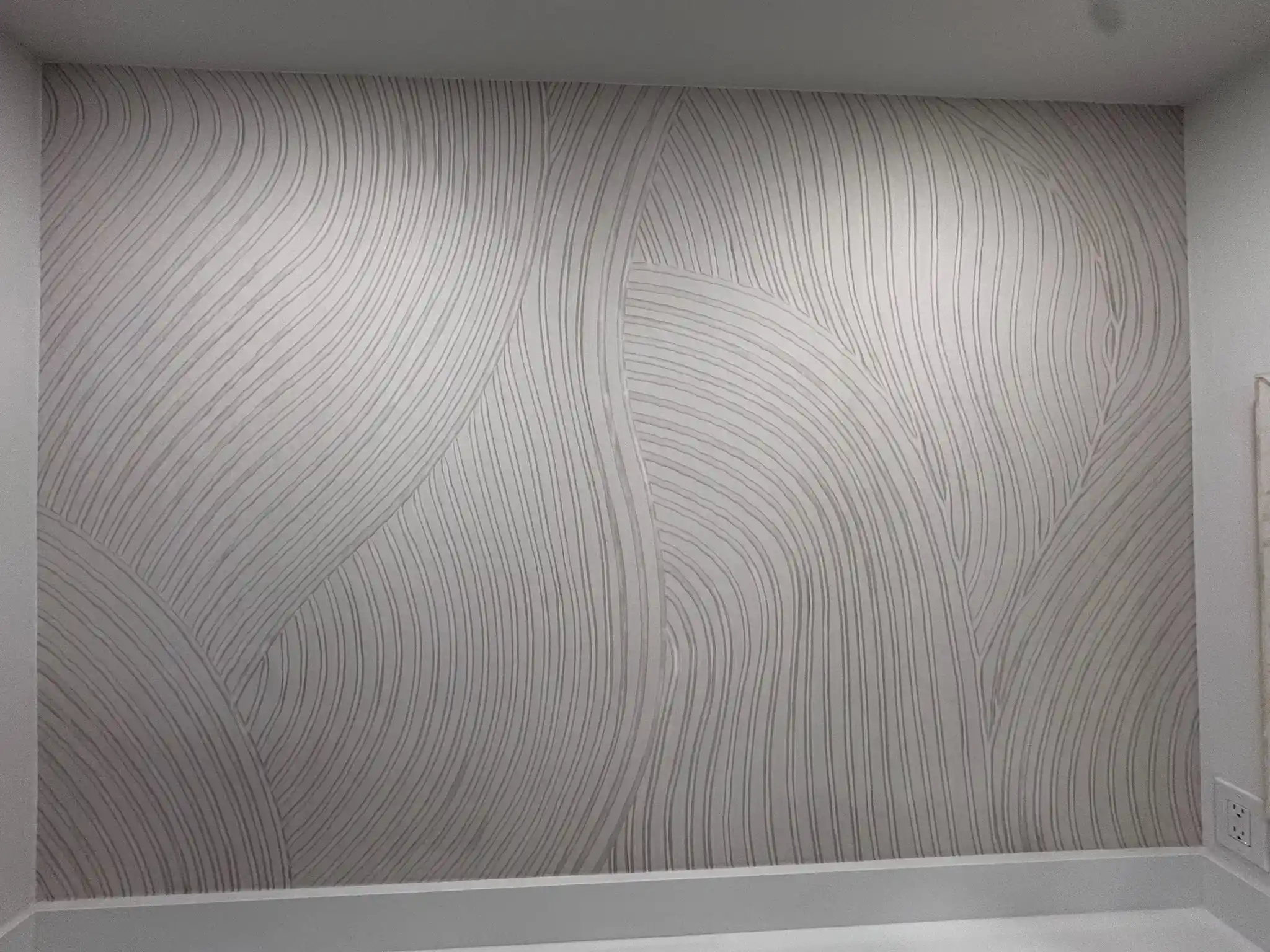
A motif changes
across a wall.
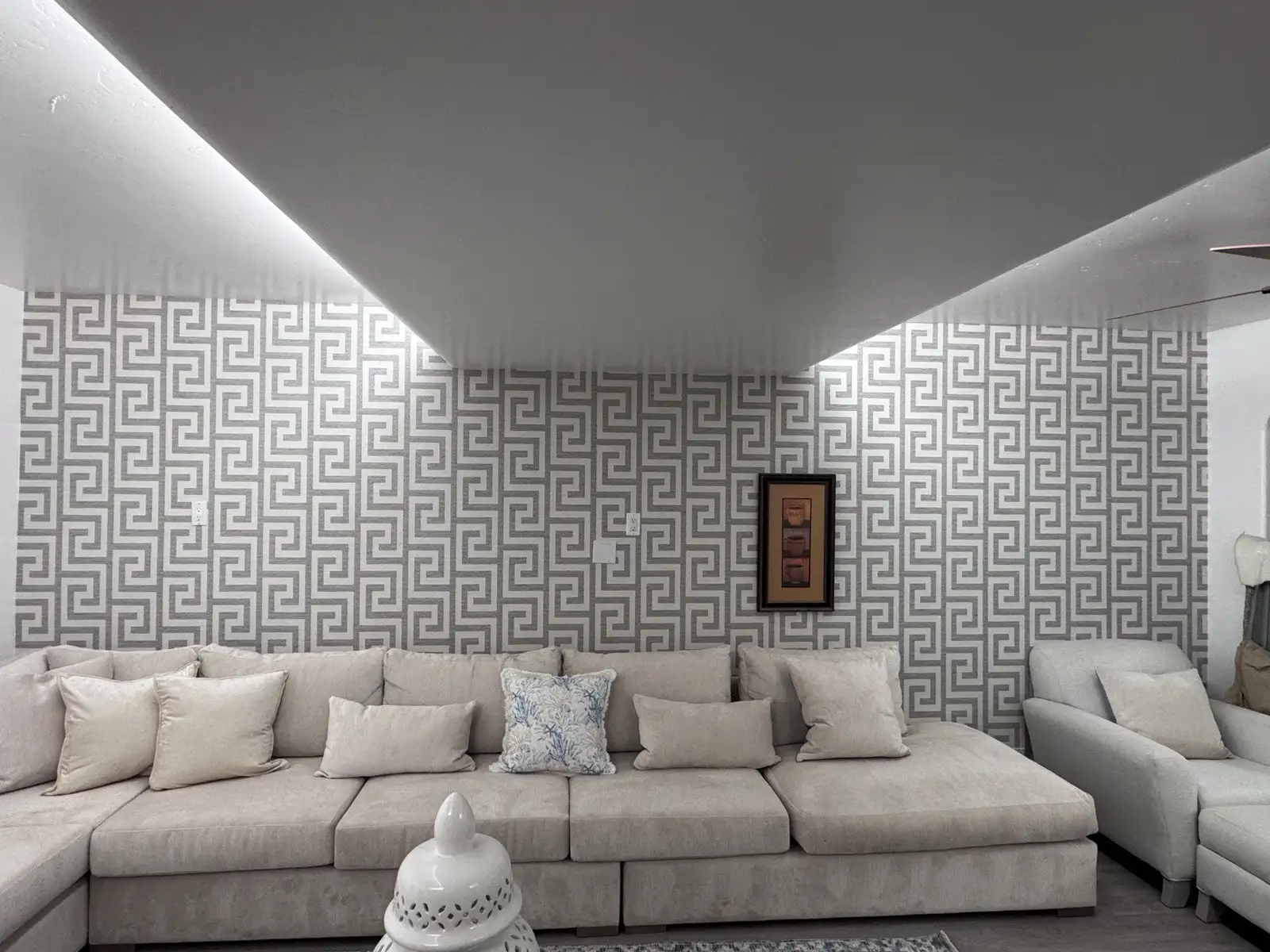
A pattern can read differently on a broad feature wall, a narrow recess or around an opening. Think about the main view and how furniture or fixtures will sit in front of it.
Pattern repeat and match type affect material planning. Dividing the wall area by the roll coverage alone may not allow for matching, trimming and the real room layout. For a mural, panel order and final dimensions have a different role from a repeating design.
Variation can belong
to the design.
Grasscloth and other natural-fiber coverings may show differences in weave or tone from one panel to another. Visible paneling can be part of the expected appearance. Understand that character before deciding whether it suits the effect you want.
Specialty material handling and care should follow the actual product guidance. Do not assume that a textured covering can be wiped, scrubbed or treated like a different wallpaper simply because both are sold for walls.
Simple to describe.
Specific to the surface.
Peel-and-stick materials have their own paint finish, curing and texture requirements. A smooth-looking wall is not proof that every self-adhesive product will adhere as intended.
Check the selected manufacturer's instructions, including any test recommendation. Removal behavior depends on the product and surface; “removable” is not a blanket guarantee against paint damage.
Choosing with care
Useful questions
before ordering.
Is every wallpaper suitable for every room?
No. Moisture exposure, cleaning needs and the wall surface should be considered against the selected covering's specification. Suitability comes from the actual product guidance, not from a general description such as “wallpaper” or “vinyl.”
Does a mural need a different layout?
A mural often uses a defined image and panel sequence rather than a repeating motif. Its final dimensions, order and placement need to be understood together. Check the supplier's instructions so the planned image fits the wall as intended.
How should I clean the finished covering?
Use the selected manufacturer's care instructions. Some materials tolerate certain cleaning methods; others can be marked or damaged by moisture and rubbing. Test and maintenance advice should be product-specific rather than borrowed from another covering.